Man up.. don't cry.. don't show weakness
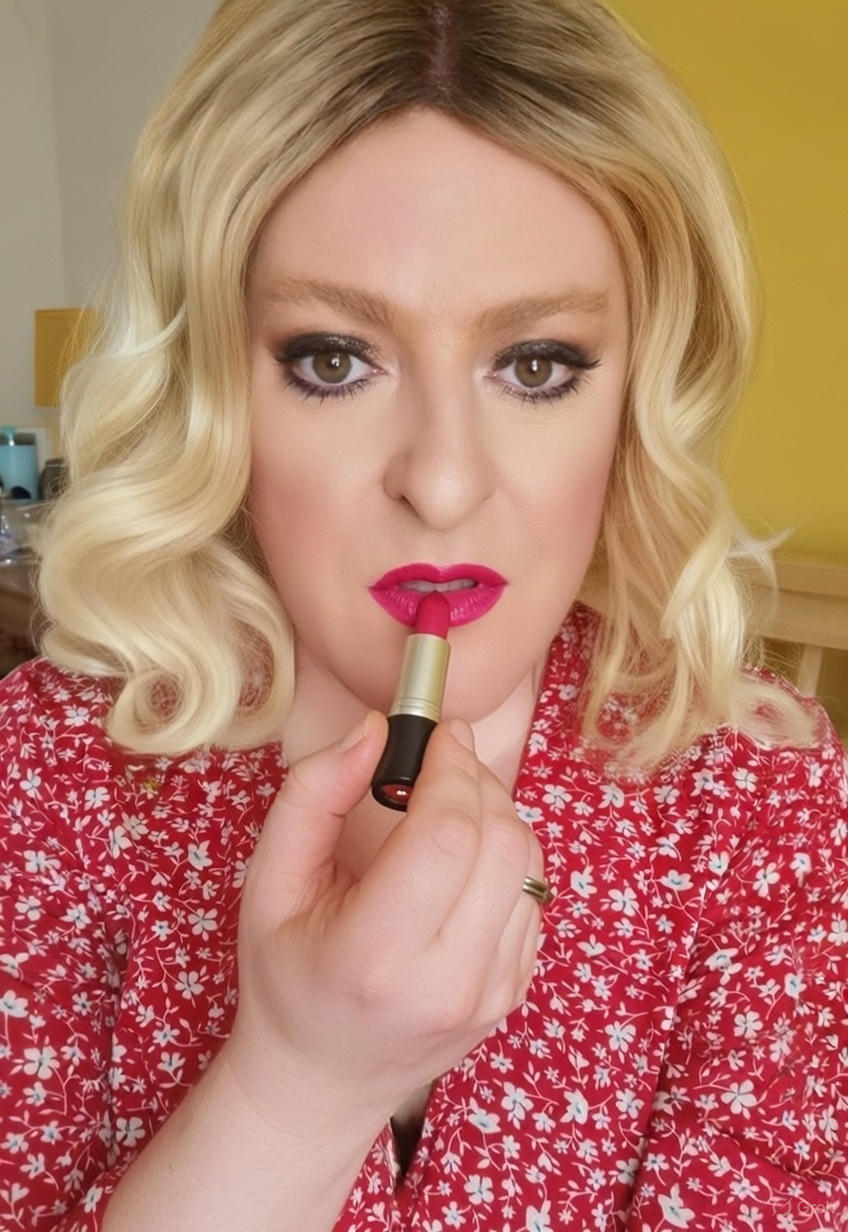
I listened to a YouTube video recently about the psychology of crossdressing.
One particular example really stuck with me.
It described a little girl falling off her bicycle.
People rush over.
“Are you OK?”
“Did you hurt yourself?”
“Come here, let me have a look.”
Now imagine a little boy falling off his bike.
“Get up.”
“You're fine.”
“Come on, man up.”
“Don't cry.”
“Get back on the bike.”
It's a simple example, but it made me stop and think.
Is that where the division begins?
From the moment we're born, we start being shown what boys and girls are supposed to be.
Pink bike. Blue bike.
Dolls for girls. Cars and action figures for boys.
Girls princess dresses, Boys superhero costume.
Girls can cry. Boys shouldn't.
Girls can show vulnerability. Boys need to be strong.
And somewhere along the way, those little messages become much bigger ones.
“Don't cry. Be a man.”
I grew up with many of those expectations.
Sport was important. Being strong was important. Being tough was important.
Standing up to bullies was something particularly ingrained in me .. smash them in the nose remembering the times school bullies have tried it on one jumping on my back and in a single bend and flick throwing him over my shoulder onto his back winding him in the process he didn't bother me again.. another thought it funny to eat a chocolate bar and spit it at me all over my coat on the way to school.. I had to wash it off when I got to school in the bathroom.. he didn't have so much luck with the blood as my instinct was hard jab to his nose breaking it.. Some of this isn't a bad instinct to have boy or girl.. protect yourself and take no crap from anyone.. but this was a taught instinct from my father..
I didn't show weakness. If somebody hit you, you stood up for yourself.
And if you were upset?
You certainly didn't want everyone seeing you cry.
My dad brought me up with those values, and I don't blame him for it.
He was bringing me up in the way he believed a boy should be brought up.
And the thing is, I probably would have done exactly the same.
If I'd had a son rather than a daughter, I can imagine myself saying:
“Come on, you're alright.”
“Don't cry.”
“Get back up.”
“Be strong.”
“Play sport.”
“Don't let people see you upset.”
I'd have thought I was preparing him for life.
Because life isn't always kind.
Life isn't always fair.
You're going to meet good people and bad people. You're going to experience disappointment, rejection, failure and sometimes cruelty.
As parents, we want to prepare our children for that.
We want them to be resilient.
We want them to be able to pick themselves up when life knocks them down.
And perhaps that's where the line becomes blurred.
Because resilience isn't the same thing as hiding your emotions.
I've made the same mistake
I've even caught myself doing it with my daughter.
I've coached her in football and seen her upset after something has happened on the pitch.
And I've said things like:
“Don't cry.”
“Don't let them see you're upset.”
“Use that anger.”
“Turn the tears into rage and go and get them.”
At the time, I thought I was helping.
I wanted her to be strong.
I wanted her to fight back.
I didn't want her team mates or opposition to see any fear or upset in her.
I wanted her to understand that opponents might try to get under her skin and that she couldn't allow them to control her.
But looking back, I'm not sure that was the right message.
Perhaps the better message would have been:
“It's OK to be upset. Let it out. Then, when you're ready, pick yourself up and carry on show them what you can do with that football.”
There's a huge difference.
One teaches you to control your emotions.
The other can teach you to bottle them up.
And bottling emotions isn't strength yet men do it all the time.
It's just hiding what's happening inside.
The blue jobs and pink jobs of adulthood
The funny thing is that those childhood expectations don't necessarily disappear when we grow up.
They just become more subtle.
Even in my own home, there are things that are jokingly described as “blue jobs” such as putting the bins out, taking rubbish to the outside bin, the traditionally masculine jobs around the house. Mowing the lawn and tending to the garden the patio..
My wife doesn't mean anything particularly sinister by it.
It's just language we've inherited.
But it made me think about how deeply ingrained these expectations are.
Even when we're adults, we're still surrounded by assumptions about what men and women should do.
My dad still has very traditional views about sport. He doesn't particularly like women competing in or presenting certain sports because, in his eyes, they're “a man's game.” or why is a woman commentating on a man's game?
Again, it's something that's been shaped by the world he grew up in.
But I'm also now an adult man, and yet I can still feel those expectations being pushed towards me.
Be masculine.
Be strong.
Be the man.
Don't be soft.
Don't show weakness.
And then there's Davina
What would your Dad think if he found out you were a crossdresser?
Something my wife's asked me.
No idea.. not planning on telling him but I could explain it.
Perhaps this is one of the reasons crossdressing has always made such sense to me.
I'm not suggesting that being told not to cry as a child somehow caused me to become a crossdresser.
It's not that simple.
Crossdressing is far more complicated than one childhood experience or one parenting style.
But I do wonder whether the expectations placed upon boys and men can help explain why stepping outside masculinity can feel so liberating.
Because when I'm Davina, I'm not being told to be the tough guy.
I'm not being told to man up.
I'm not worrying about whether I look masculine enough.
I'm not trying to prove anything.
I can wear a dress.
I can put on tights.
I can wear heels.
I can do my makeup.. really well.
I can put on my wig and perfume.
And suddenly I'm allowed to explore a completely different side of myself.
A softer side.
A more expressive side.
A feminine side.
And perhaps most importantly, a side that doesn't have to apologise for being emotional.
Maybe that's the escape
For me, crossdressing is an escape.
Not an escape from being a man forever.
Not a rejection of masculinity.
And certainly not an accusation that my parents got everything or anything wrong.
It's an escape from the expectation that I have to be masculine all the time.
That's an important distinction.
I can enjoy sport.
I can be competitive.
I can fix things.
I can put the bins out... Even did it once as Davina.. lol
I can be strong.
I can be the person my family relies on.
And I can also be me codename: Davina.
Those things don't have to contradict each other.
Maybe the problem isn't masculinity itself.
Maybe the problem is when we're taught that masculinity is the only acceptable way for a man to be.
What are we really teaching our children?
Perhaps the lesson I take from all of this is that we need to rethink what we mean when we tell children to be strong.
Because strength isn't never crying.
Strength isn't pretending something doesn't hurt.
Strength isn't punching somebody because they insulted you.
And strength certainly isn't being afraid to show emotion.
Real strength might be being able to say:
“That hurt me.”
“I'm upset.”
“I'm scared.”
“I need help.”
'I'm stressed out"
"I'm depressed"
"I'm burnt out physically, emotionally and mentally"
And then finding the courage to carry on .. or finding an escape valve.
That's something I wish I'd understood earlier.
And it's something I'm still learning.
Perhaps that's also why I appreciate becoming "Davina" so much.
Crossdressing gives me permission to put down the expectations I've carried for decades.
For a while, I don't have to be the tough bloke.
I don't have to be the strong one.
I don't have to “man up.”
I can simply be.. chilled.
Just a different part of me.
And perhaps, ironically, accepting that softer side hasn't made me weaker.
It's made me more comfortable with who I am.
I think the strongest line running through this is “resilience isn't the same thing as hiding your emotions.” It also avoids making the potentially problematic claim that childhood gender conditioning caused your crossdressing, while still honestly exploring whether escaping masculinity is part of what makes becoming Davina or whatever name you chose so psychologically valuable to you.
Thought provoking?
Davina
Comments